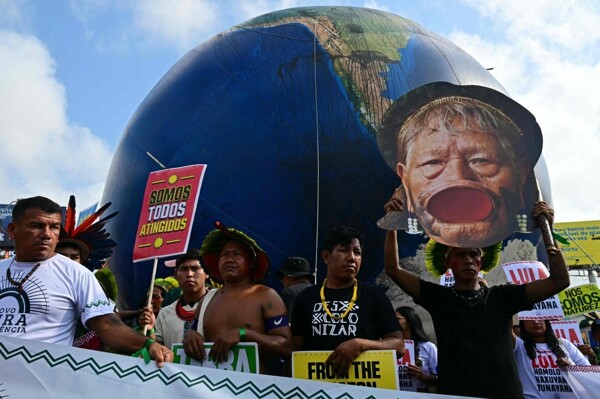
With the start of the 30th session of the United Nations Climate Change Conference (COP30) in Brazil yesterday, after three decades since the first annual climate conference in the world, experts and observers are re-examining and evaluating the data that tracks the progress made in combating global warming. Despite years of negotiations, promises, and summits, greenhouse gas emissions have increased by a third since the first meeting, and the consumption of fossil fuels continues to rise, while global temperatures are on track to exceed the thresholds that scientists say will lead to catastrophic damage to the planet. In this context, Panama's Special Representative on Climate Change, Juan Carlos Monterrey, who leads a campaign to simplify major environmental agreements, said: "Yes, there have been some positive results from these agreements, but they are not enough to guarantee the continuation of life on Earth." This grim assessment raises a fundamental question as the summit convenes in the Brazilian city of Belem from November 10 to 21: Has global climate diplomacy failed? Or have these meetings succeeded in ways that initial data cannot capture? In this regard, the head of the United Nations Framework Convention on Climate Change, Simon Stiell, stated that the annual meetings have made "significant progress," but he also confirmed that "more is needed, and faster, as climate disasters are hitting every country."
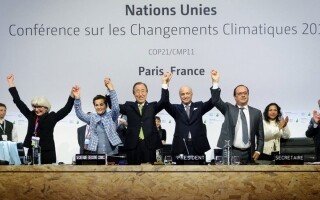
Historic Agreement Global greenhouse gas emissions have increased by 34% since 1995. Although this rate is less than the 64% increase seen in the past three decades, it still represents a trajectory that is inconsistent with climate stability, according to scientists. U.S. Climate Envoy under Democratic President Joe Biden, John Kerry, said: "We still have time to solve this problem, and we can still win this battle if we deliver on our promises," adding: "We just need to motivate ourselves and start working." In turn, the World Resources Institute, a climate advocacy research group, said in an October report that governments' targets for reducing greenhouse gas emissions by 2035 are still insufficient to prevent global temperatures from rising more than 1.5 degrees Celsius above pre-industrial levels—the threshold set by world governments in the historic climate agreement reached in Paris in 2015. Global temperatures have exceeded the 1.5-degree Celsius threshold in some years, with 2023 and 2024 ranked among the hottest years on record, although the 30-year average, the standard used in the Paris Agreement, is still below this level. In turn, the Climate Envoy for the Caribbean Community group and former Minister of Energy in Saint Lucia, James Fletcher, said: "There will be an overshoot, which is very unfortunate," noting that "any rise above 1.5 degrees Celsius would be catastrophic for small island developing states." The head of the United Nations Framework Convention on Climate Change also confirmed that without the "Conference of the Parties" (COP) process, global temperatures would head toward a catastrophic five-degree Celsius rise instead of the currently projected increase of less than three degrees.
Record Levels At the same time, the consumption of fossil fuels, the main source of greenhouse gas emissions, remains persistently high, driven by economic growth and, finally, the energy demand for data centers running artificial intelligence. The International Energy Agency expects demand for coal, one of the most polluting fossil fuels, to remain at record levels until 2027, with increasing demand in China, India, and other developing countries offsetting declines elsewhere. On the other hand, the pace of solar and wind energy adoption has accelerated, electric vehicle sales have risen globally, and overall energy efficiency has improved, according to data from the International Energy Agency. Global investment in clean energy reached $2.2 trillion last year, surpassing the $1 trillion invested in fossil fuels, according to data from the International Energy Agency. In this context, former German Climate Envoy and participant in every COP summit, Jennifer Morgan, said: "Ten years ago, we couldn't have dreamed of these technological developments, falling prices for electric vehicles and renewable energy." However, the increased use of renewable energy and electric vehicles has largely offset rising energy demand rather than replacing fossil fuels.
"The Greatest Hoax" In the United States, President Donald Trump called climate change "the greatest hoax in the world," cutting financial subsidies for solar and wind energy and electric vehicles, and creating obstacles to obtaining permits for renewable energy projects, opening more land for drilling and mining. White House Press Secretary Taylor Rogers said: "President Trump will not jeopardize our economic and national security for the sake of achieving vague climate goals that kill other countries." Nevertheless, despite these setbacks in the U.S., the Paris Climate Agreement, perhaps the greatest achievement of the COP process, continued even after the U.S. withdrawal under the Trump administration, meaning that countries remain theoretically committed to preventing the worst impacts of climate change.
Systemic Reform Nevertheless, COP negotiations, which are based on consensus and require unanimous decisions by nearly 200 countries, have come under sharp criticism. Panama's Special Representative on Climate Change, Juan Carlos Monterrey, said: "We are drowning in paperwork and reports, we are drowning in mandates that are only evaluated based on the number of pages of a document versus the number of lives we save," adding: "We need a systemic reform." In turn, former UN Climate Chief Christiana Figueres, who was the lead negotiator for the Paris Agreement, said COP conferences could consider moving to a voting approach like the International Monetary Fund, but Figueres also said that political compromises have become less important as global economies adopt clean energy technologies. She added: "Today, the driving force for the transition is no longer governments; it comes from the private sector, industry, and technology development," pointing to China, which alone accounts for a third of global investments in clean energy in solar and wind power, batteries, and electric vehicle manufacturing, according to the International Energy Agency.
From "Japan Times" A Better Option One veteran who participated in the 20th Conference of the Parties (COP20) to the United Nations Framework Convention on Climate Change believes that the current process is the best way to ensure all countries are involved in tackling a global problem. Manuel Pulgar-Vidal, who was COP20 President in Peru and is now Climate & Energy Lead at the World Wildlife Fund, said: "I don't think there are any alternatives to the multilateral process." Former U.S. Climate Envoy John Kerry acknowledged the flaws in these annual meetings but also confirmed they remain vital. He said: "We know they are not enough, but continuing to work and keep the process going is better than standing by with our hands in our pockets."
• The Earth's temperature has exceeded the 1.5-degree Celsius threshold in some years, with 2023 and 2024 ranked among the hottest years on record.