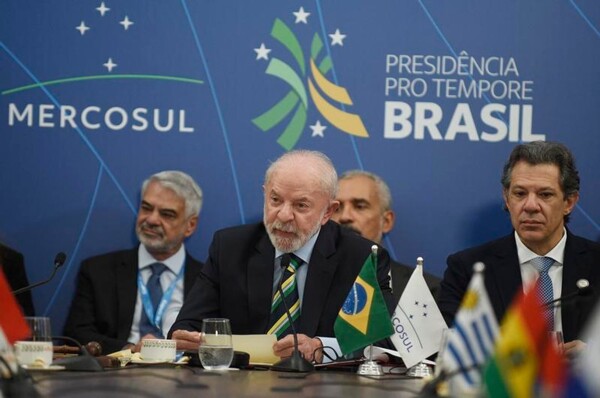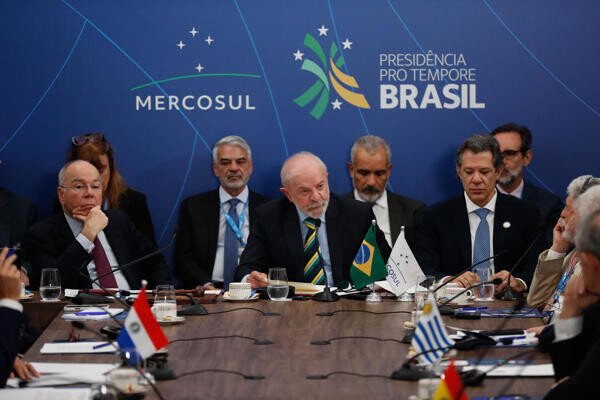
The creation of a Mercosur commission to coordinate the fight against organized crime in the region was one of the most prominent issues discussed by the presidents of the South American bloc at the summit held this Saturday in the Brazilian city of Foz do Iguaçu. In a meeting where internal divergences surfaced over issues such as the crisis in Venezuela and Mercosur's rigidity in its free trade agreements with other countries, the heads of state agreed to highlight the importance of the new body. The creation of the so-called Mercosur Strategy Commission against Transnational Organized Crime was approved last November at a meeting of Ministers of Justice and Security in Brazil, which held the bloc's rotating presidency this semester. Its objective is to allow coordination among Mercosur countries of the work of competent authorities in the prevention, investigation, and repression of transnational organized crime. The mechanism will also be tasked with developing strategies to jointly combat transnational organized crime in the region's four countries (Argentina, Brazil, Paraguay, and Uruguay). That is why Argentina pushed for the creation of the Mercosur Commission against Transnational Organized Crime, which is now a reality, said Argentine President Javier Milei. Brazil's president, Luiz Inácio Lula da Silva, cited criminal organizations as one of the main threats to sovereignty in South America and stated that the weakening of institutions gives these mafias more room to operate in the region. That is why we value the creation of the Commission so much, affirmed Uruguayan President Yamandú Orsi in his speech at the regional summit. Brazil's president, Luiz Inácio Lula da Silva, stated: "Public safety is a citizen's right and a state's duty, regardless of ideology," making it clear that his political disagreements with other regional leaders do not prevent him from agreeing on the need to unite to fight transnational organized crime. The progressive leader affirmed that Mercosur demonstrated its willingness to confront criminal networks jointly, a position it made clear last semester when it approved both an agreement to fight human trafficking and the creation of a commission to define a strategy against organized crime. "We also established a specialized working group for asset recovery, to be able to strangle the sources of financing for illicit activities," said the host leader of the Summit. He added that Brazil, in partnership with Uruguay, intends to convene a meeting of Ministers of Justice and Security from all of South America to "strengthen South American cooperation in the fight against organized crime." "We cannot ignore the dimension of security; transnational crime, drug trafficking, and human trafficking know no territorial boundaries." Mercosur must also be the forum that allows our countries to articulate efforts to face the threats and challenges posed to the region by the advance of transnational organized crime. For the Uruguayan president, the new mechanism will allow for more effective coordination in identifying threats and in the prevention, investigation, and repression of various criminal modalities. Some of the leaders alluded to how major criminal organizations, including Brazil's Primeiro Comando da Capital and Comando Vermelho, operate throughout the region without respecting borders. From the first day, we have warned about the situation in the triple border.