From March 26 to 29, the Brazilian city of Porto Alegre will host the First International Antifascist Conference and for the Sovereignty of the Peoples. This event will bring together social organizations, popular movements, political parties, trade unions, and intellectuals from various countries with the aim of debating and coordinating responses to the global growth of the far right.
The initiative is conceived as a space for the convergence of struggles, political deliberation, and international articulation in a context that the organizers characterize as marked by the advance of authoritarian projects and the strengthening of far-right currents in different regions of the world. According to the event's call, the conference arises as a 'collective resistance to the global advance of the far right and the authoritarian escalation that threatens rights and democracy,' and seeks to strengthen coordination between social movements, political organizations, and antifascist activists at the international level.
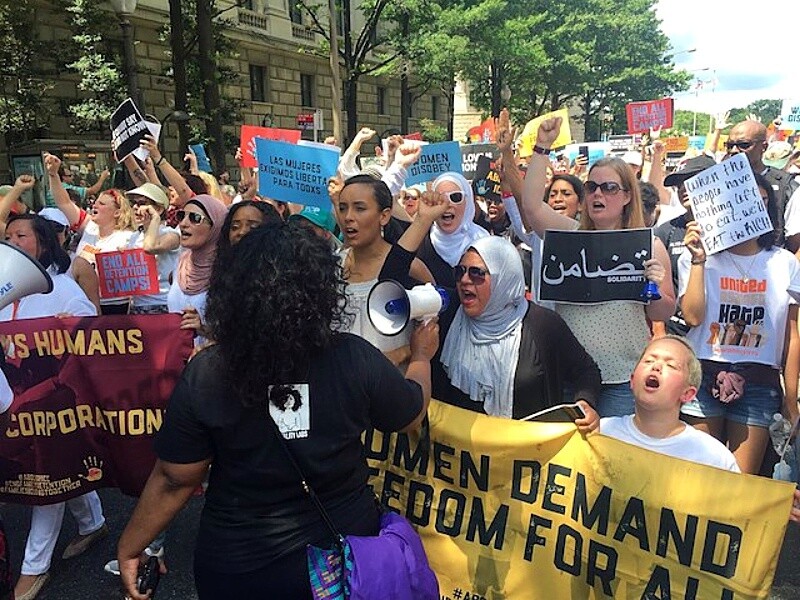
The conference will begin on Thursday, March 26, with the Antifascist Authorities Forum, a space that will bring together institutional representatives and political leaders to debate the role of governments and parliaments in the face of the advance of the far right. The day will open with a panel of parliamentarians titled 'The Role and Limits of Institutional Action in the Democratic Struggle,' where the scope of institutional tools to curb authoritarian processes will be discussed. Subsequently, there will be a panel dedicated to progressive governments under the title 'The Radicalization of Democracy in Popular Governments,' aimed at reflecting on state management experiences in the face of the conservative offensive. The day will conclude with an opening march through the city streets, which will mark the political start of the event and seek to publicize its international call.
On Friday, March 27, the central conferences of the event will begin. The event will combine international panels, workshops, debates, presentations of experiences, discussion rounds, self-managed activities, and street mobilizations. The first will be dedicated to analyzing 'the far-right offensive in the world: causes, consequences, and challenges,' with the aim of sharing diagnoses on the growth of these political currents in different countries. Later, a panel focused on 'the role of the working class in the fight against neoliberalism and fascism' will be held, addressing the relationship between economic policies, labor precariousness, and the strengthening of authoritarian projects. The day will close with a specific debate on 'the political situation in Brazil,' under the axis 'Brazil under the threat of the far right and imperialism,' and with a conference dedicated to 'solidarity between peoples and the anti-imperialist struggle.'
In addition to the central panels, the conference will include self-managed activities organized by social movements, collectives, organizations, and participants. These spaces can include workshops, debates, presentations of experiences, and discussion rounds, with the aim of expanding the plurality of voices and strengthening the links between different territorial and sectoral struggles. According to the organizers, these instances seek to ensure that the event is not just an event of academic or political debates, but also a space for direct exchange between grassroots activists and organizations.
The conference will feature the participation of political leaders, intellectuals, and activists from different countries, reflecting the global dimension of the phenomenon that the event seeks to discuss. Among the confirmed figures are the British MP Zarah Sultana, the Cuban intellectual Abel Prieto, and the Italian antifascist activist Ilaria Salis, among other participants from various continents. The call states that the growth of the far right is not an isolated phenomenon in a single country or region, but part of a global process that impacts the rights of the working class, social movements, and contemporary democracies.