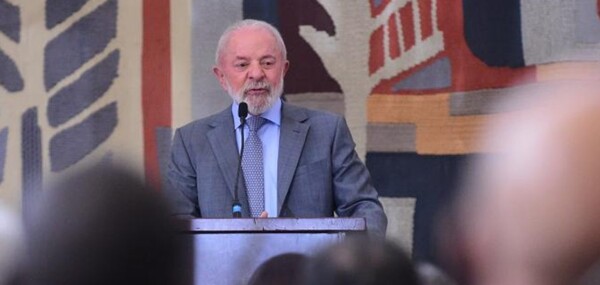
At the G20 summit to be held in Rio de Janeiro, participating countries are expected to sign commitments to combat the climate crisis. However, the recent rise of Donald Trump to power in the United States, who has expressed skepticism on the issue, could hinder these efforts.
Brazil, as the host country and president of the group that gathers the largest polluting economies on the planet, has promoted the climate agenda as one of the main topics to be discussed at the summit. Together, these economies are responsible for approximately 80% of global greenhouse gas emissions.
Among the agreements expected to be ratified during the summit is the expansion of financial flows aimed at combating the climate crisis, as well as a commitment to tripling global renewable energy capacity by 2030. Additionally, efforts will be made to promote ecological transformation through economic tools such as the bioeconomy to encourage sustainable use of natural resources.
In the specific area of environmental preservation, support is proposed with government funds for the Forever Tropical Forests Fund (TFFF), an initiative led by Brazil. Furthermore, commitments are expected to protect the oceans, implement a UN convention against plastic pollution, and improve resource management to promote a circular economy.
Despite the progress made, Donald Trump's stance on climate change poses a challenge for consensus at the G20. Due to his position to withdraw the United States from the Paris Agreement, climate negotiations could be significantly weakened, which could negatively impact global emissions and initiatives to combat climate change.