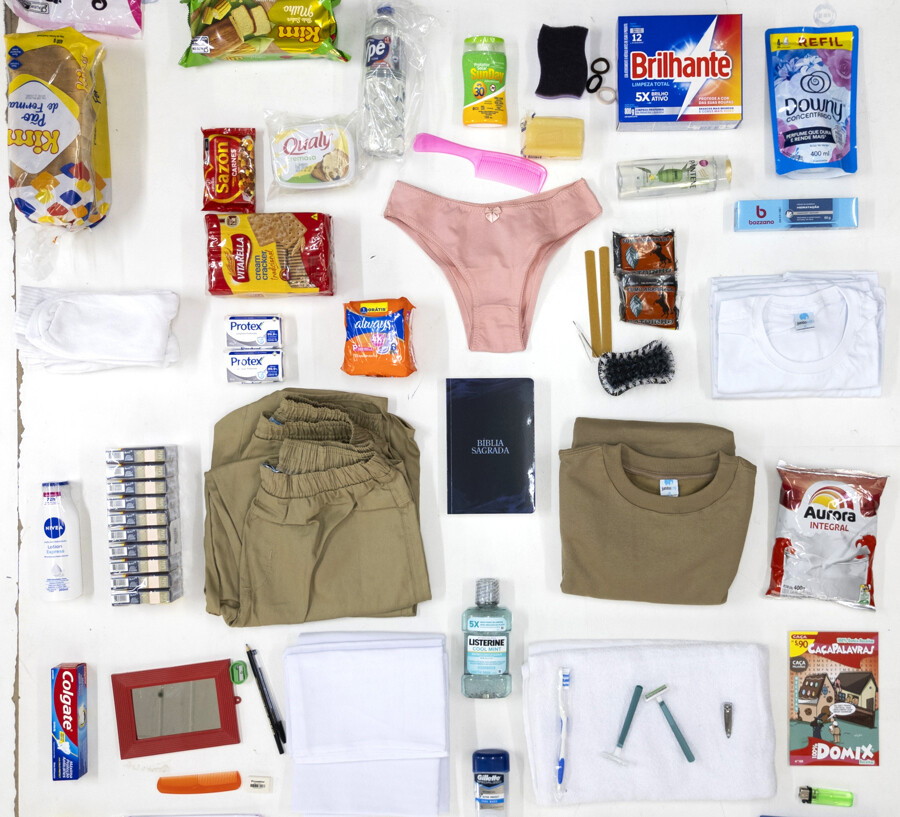
In São Paulo, Brazil, a unique type of e-commerce has emerged that assists the families of inmates. This business has transformed a tedious process of waiting in endless lines outside prisons into an online system for purchasing essential goods.
The ritual is simple: a relative places an order, the company dispatches it, and a cardboard box weighing up to 12 kg with products arrives by mail and crosses the walls of one of the 213 penal institutions in the state of São Paulo — in the country with the third-largest prison population in the world.
These kits for inmates, known in Brazil as 'jumbos,' are increasingly popular. However, the reality of the prison system imposes its own strict rules: an overly generous package can make a new inmate a target. Therefore, specialized stores advise on austerity and sending only the basics: a set of clothes, some hygiene items, and a little food.
«Over time, we understood that we were not just selling, but also providing a social service,» says Víctor, the founder's son. He details the rules: white bedding must have no hems, panettone must be industrial and in its original packaging, and books must be «without political coloring».
The daily task is to decipher the rules of a system that «changes the rules» faster than it informs them. During the first two years, the founder, Sebastião, dedicated himself to «studying» and gathering the instructions for each prison. This dynamic continues to this day. He recounts how he recently traveled 200 kilometers to a penitentiary, «100 km there and 100 km back,» to find out why one of his packages had been rejected.
«If staying up to date with regulations sometimes seems like a difficult task for us, imagine what it's like for the families,» he says. «They are desperate, anxious, not knowing where or who to turn to.» The initial impulse for any family is to go overboard: to fill the box with products to alleviate the inmate's confinement.
This need has become systematic. On the shelves of Jumbo CDP, one of the leading firms in the sector, the variety is technical, not aesthetic. Employees must choose from more than five types of soap: green, yellow, white; with or without wrapping; glycerin or scented. In some prisons, the walls are yellow, so they do not allow soap of the same color that could camouflage a possible hole in the wall, one of the most common escape tactics, explains Víctor Albuquerque, the company's head of strategy.
«This surplus not only causes overcrowding but also creates a supply gap that the State is unable to fill,» says Víctor. This was understood by Demetrius Aparecido de Freitas during his time in prison, and with the money he saved from his internal jobs, he created Disk Jumbo, a company dedicated to solving this type of mailing.
Violating at least one of the dozens of rules governing packages can mean the product's disposal or, in cases of recidivism or more serious violations, an indefinite restriction for the relative who sends it.
The figures from the National Secretariat for Penitentiary Policies depict a system on the brink of collapse: Brazil holds approximately 702,000 people in spaces designed for only 500,000.