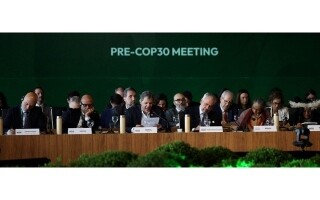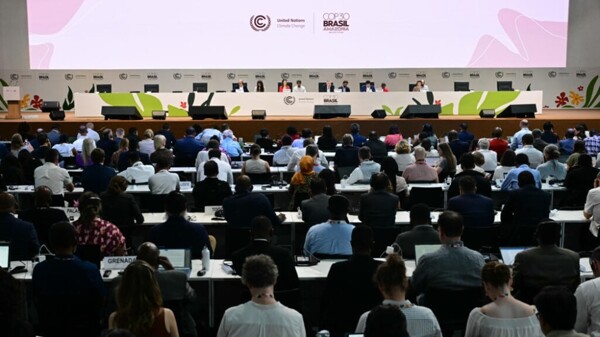
As climate crises intensify, world leaders are preparing for the COP30 summit in Brazil, scheduled for November 10-21. This summit is seen as a crucial opportunity to forge a new alliance of nations committed to tackling climate change.
With the traditional pillars of the old global order weakening and the U.S. stepping back from its leadership role in solving the climate crisis, the responsibility to address this global challenge falls to other capable powers. Brazil, hosting the conference, offers a platform for leaders who recognize the severity of the situation to form a coalition against climate change skepticism and inaction.
While China is an emerging global leader in green technologies, its recent climate commitments submitted to the UN have been disappointing, casting doubt on its readiness for global climate leadership. Meanwhile, the European Union, the UK, and Norway have led Western efforts in environmental policy and green finance for developing nations, but the EU now appears less confident due to pressure from economic sectors seeking to scale back climate ambitions and far-right parties trying to disrupt the consensus around "net-zero" goals.
Facing geopolitical instability and rising environmental risks, world leaders face a true test of their commitment to collective action. Recent polls indicate that public opinion and parliaments worldwide understand that current efforts are insufficient. Therefore, COP30 in Brazil must represent a turning point towards more ambitious and humane climate leadership, putting planetary and human protection at the heart of its policies.
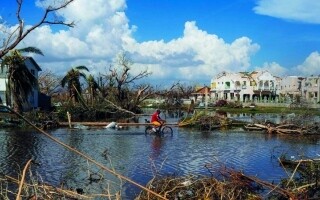
Leaders must focus on essential measures such as increasing public and private investments to combat floods, wildfires, and droughts. Climate adaptation and mitigation policies must be linked to saving lives and improving the quality of life today, not just in the future. This includes boosting agriculture in arid lands, preventing half a million annual deaths from extreme heat, and addressing poverty-related health issues like water-borne diseases, which cause eight million premature deaths yearly.
The Paris Agreement, established nearly a decade ago, set a clear goal to limit global warming to well below 2°C, pursuing efforts to limit it to 1.5°C. Despite the significant drop in renewable energy costs since then, the world is still off track. Global temperatures have already risen by 1.5°C, and emissions continue to increase. In the coming weeks, major emitting nations are expected to announce their 2035 climate targets, yet the large gap between the commitments of rich and poor nations persists, indicating a likely temperature rise of 2.3°C to 2.7°C by the century's end. Reports from the World Meteorological Organization show that carbon dioxide levels are rising at the fastest rate on record, causing devastating economic and environmental damage.
The damage from climate disasters reached $451 billion in 2022 and 2023 alone. German expert Gunther Thallinger of Allianz noted that entire regions have become "uninsurable" due to asset degradation. In 2023, over 23 million people in Africa suffered from acute famine due to extreme droughts, along with heat-related illnesses like malaria and diarrhea.
Countries are required to update their "Nationally Determined Contributions" (NDCs) under the Paris Agreement, but progress has been extremely limited. After COP26 in Glasgow, which concluded that current plans were insufficient, countries pledged to submit more ambitious plans. To date, only one country has done so, and only 67 out of 197 have submitted their plans. This would result in emissions reductions of just 10%, far below the 60% needed to stay within the 1.5°C limit.
For this reason, the leaders' summit hosted by Brazilian President Luiz Inácio Lula da Silva on November 6-7, before COP30 in Belém, is of paramount importance. It represents a critical moment to pave the way for a more ambitious Belém Declaration than the current proposal.
Participating countries must adopt key steps, including accelerating the implementation of the Paris Agreement, enhancing decarbonization plans in transport, buildings, industry, and agriculture, and supporting proposals like the UK's to accelerate carbon neutrality and expand carbon markets as Brazil has called for. Additionally, securing massive financing of $1.3 trillion for the Global South by 2035, as outlined in the 'Baku to Belém' roadmap agreed upon at COP29, is essential. This can be achieved through innovative financing instruments, including debt swaps, development bank guarantees, and stimulating private capital.
Brazil is hosting the COP30 climate conference from November 10-21.