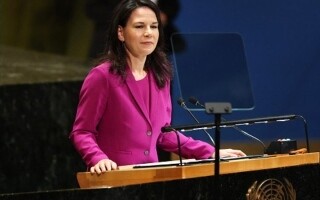
Despite the numerous wars and conflicts around the world, the President of the United Nations General Assembly, Annalena Baerbock, stated that the climate crisis is "the greatest threat of our time".
Baerbock, at the start of her visit to the global climate conference in the Brazilian city of Belém, said in an interview with the German press agency (dpa): "Around 3.6 billion people, almost half of the world's population, are today highly exposed to the impacts of climate change: droughts, floods, extreme heat, and increasing food insecurity." She added that this exacerbates "a vicious cycle of hunger, poverty, displacement, instability, and conflicts".
The former German Foreign Minister, who led Germany's climate negotiations in recent years, said: "There have certainly been easier times geopolitically to protect the climate, but there is no alternative to international cooperation. The climate does not care about the denial of scientific facts, and carbon dioxide does not stop at borders".
Former US President Donald Trump, one of the most prominent deniers of human-caused global warming, withdrew from the 2015 Paris Agreement during his first term, but the process took years. The agreement was immediately reinstated when Joe Biden took office in 2021. Trump withdrew from the agreement again on the first day of his second term.
Baerbock confirmed that despite the headwinds from geopolitics, there is no room for retreat from an economic perspective, as renewable energy sources accounted for 90% of all new energy facilities worldwide last year.
Parallel to the UN conference, hundreds of organizations, movements, and networks from Brazil and abroad are gathering in Belém for the "People's Summit".
German Environment Minister Karsten Schneider arrives in Brazil for the weekend. Before entering the decisive phase of negotiations, the minister will meet today with members of the "quilombo" community who live in and depend on the rainforest, and plans to visit a nature reserve there.
Baerbock said: "Now we must build on that and boost investments, especially in developing and emerging countries".
She stressed the need to support poor countries that contributed the least to the crisis but are suffering the most from it, adding that a single hurricane can destroy infrastructure and economic progress for decades in some island nations.
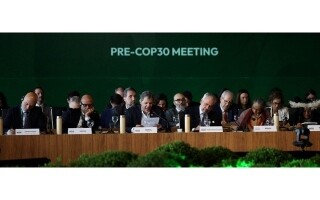
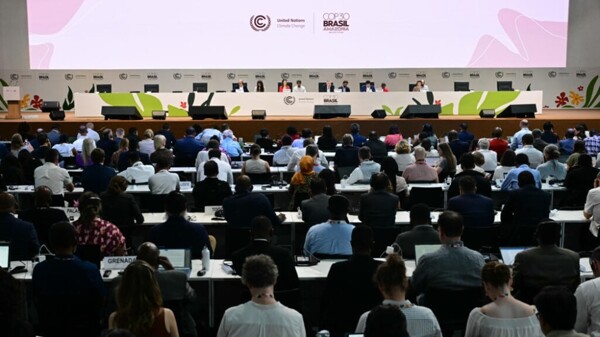
Some 200 countries are participating in the 30th Conference of the Parties (COP30) in the Amazon region until next week to discuss ways to limit global warming, alongside demands from developing countries for financial aid to adapt to climate change impacts such as droughts, high temperatures, forest fires, and storms.
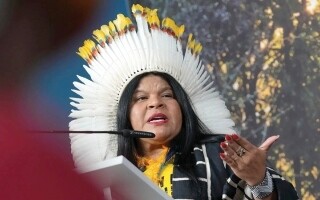
A major demonstration is planned in the center of Belém, with the participation of tens of thousands of people, including indigenous activists and environmental activists.