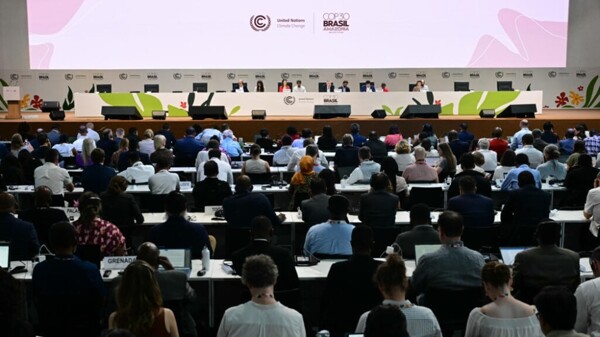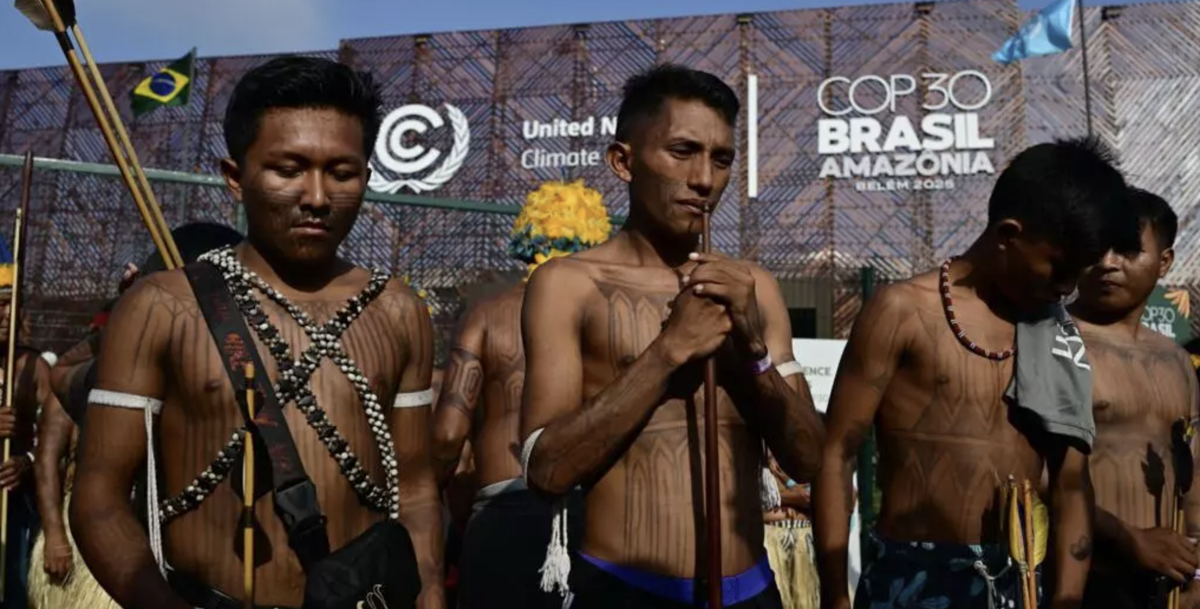
In various forums and meeting spaces where organizations and social collectives from around the world, especially from Latin America, are trying these days to revitalize internationalist alliances to face the global extractivist offensive. From the first, in fact, not much can be expected. At the same time, from November 7 to 12, the IV International Meeting of Affected by Dams was held, resulting from a coordination process of community struggles against large hydroelectric plants that has existed for three decades. Peoples against extractivism On a planet plunged into the climate emergency and extreme inequality generated by the Capitalocene (and by policies that greenwash capitalism), voices of different resistances to the extractivist model have joined the "Peoples against Extractivism" coalition. From November 8 to 11, the I Latin American and Caribbean Ecosocialist Forums took place, where two hundred grassroots militants from very different countries met to reflect, based on the experience of struggles against territorial plunder, on strategies to strengthen a common internationalist front that can face the socio-ecological crisis. This internationalism is woven, to begin with, in the denunciation and support for the peoples of Ecuador, Panama, and Peru, where state repression has intensified in recent months with arbitrary detentions, militarization of communities, and judicial persecution of environmental and social leaders. In this new phase of capitalist accumulation, dispossession is imposed upon peoples and their territories — cynically turned into sacrifice zones — now justified in the name of the energy transition. Past the experience of the World Social Forum and seeking to overcome the contradictions of progressive governments, the objective is to promote processes of community self-organization that rebuild the social fabric and look beyond the permanent demands on the State. Peoples' Summits The Peoples' Summits have been taking place for thirty years within the framework of the climate summits promoted by the United Nations. In a city decorated for the occasion with thousands of colorful posters highlighting the importance of caring for the Amazon, the gap between the usual rhetoric of green capitalism and the perpetually postponed urgency of transforming the primary-export model will once again be evident. But this forum is by no means the only one being held in Belém outside the initiatives sponsored by the Brazilian government. In this accelerated race to secure access to critical raw materials, which does not imply any real progress in the ecosocial transition, mining currently stands as the most violent expression of extractivism: militarization, forced displacement, racism, criminalization, and even murders of those who defend the commons. The "Peoples against Extractivism" alliance defends that protecting habitats and ecosystems is inseparable from the struggle against the neocolonial extractivist offensive. In the face of dispossession of territories, militarization, and corporate impunity, this internationalist network proposes to strengthen the defense of the territory as a living body, because the territory is not a resource: it is the material basis of the life of communities and the nature that inhabits it, and in the case of indigenous peoples, the spiritual basis of life. This space was constituted in Belém on November 9 to unite and articulate movements, communities, and organizations that face dispossession and bet on a profound transformation of the system that threatens life and territories. Experiences from Latin America and Europe have mainly been integrated into this international network, although with the commitment to expand its presence on the African continent. And at the same time, facing the expansion of the extractive frontier, it is based on the construction of alternatives from below. Territorial resistances are organized in defense of water, land, territories, and those who inhabit them, articulating different struggles and demands. And the construction of community alternatives, such as solidarity economies, self-governments, feminist and agroecological networks, and many other practices promoted by grassroots organizations. Strengthening transnational counter-hegemonic networks is key to facing corporate power and moving towards a horizon of dignified life and climate justice. Members of the Munduruku Ipereg Ayu indigenous movement protest outside the headquarters of the UN COP30 climate conference in Belém, Brazil © Pablo PORCIUNCULA / AFP While in Belém empty promises are repeated, a plurality of social, indigenous, and environmental movements are promoting an internationalist agenda against extractivism and for climate justice from various meeting spaces. On one hand, at the official summit, which was inaugurated yesterday and where for two weeks the country delegations will debate whether it is possible to advance in terms of mitigation, financing, and mechanisms for a just transition. At the People's Summit in Belém, there will be representatives from more than 1,200 organizations from around the globe, which will group around a single objective: "To strengthen popular mobilization and converge on unified agendas: socio-environmental, anti-patriarchal, anti-capitalist, anti-colonial, anti-racist, and based on human rights," it says in the manifesto. The People's Summit will begin tomorrow, November 12, with a river march of more than 200 boats in which some 5,000 people will travel. With this nautical caravan, the movements participating in this alternative summit "unite to make resonate, through the waters, the cry of denunciation against the COP decisions that perpetuate this model of territorial exploitation." This year, after the three editions of the COP held in countries characterized by the criminalization of the right to protest and the persecution of activists and organizations critical of governments, there has been a resurgence of interest from social collectives in this forum. Also the right to resistance, self-defense, and self-determination of peoples, as pillars of environmental and social justice. As one of the spokespeople for the initiative said, "the waters of the Amazon bring the voices the world needs to hear: those of those who defend life, territories, and the climate." The dozens of talks, workshops, and assemblies that will take place over four days within the framework of the People's Summit will culminate on Saturday, November 15, with a great demonstration, which will be accompanied by decentralized actions in many other countries. "We don't want it to be a flea market of ideological products, we want something very serious and for the decisions to be implemented," said the president of Brazil, acknowledging the ineffectiveness of summits that ride between greenwashing and business as usual. In the second, however, renewed hopes can be found. The coalition is made up of grassroots movements, indigenous peoples, Afro-descendants, and peasants, as well as various mass social organizations. In parallel to COP 30 — we could also say in contrast to the official summit — a multitude of indigenous, environmental, trade union, feminist, and anti-capitalist organizations and movements have gathered in Belém to rethink strategies and reactivate international instances to strengthen processes of struggle and resistance. These processes reposition the right to resist as a shared practice against neocolonial extractivism. The planet and the communities cannot continue to wait for the goodwill of governments that promote the extractivist fever. It is not limited to mining or oil; it also includes monocultures, agribusiness, biofuels, and large-scale energy projects that consolidate a dependent model and generate a reprimarization of peripheral economies. For this network, extractivism is not just an economic practice, but a form of power organization within liberal democracies and a mechanism of domination that conditions the life of communities. All of them fight, from different fronts, against the same enemy: the extractivist model that perpetuates the continuous overexploitation of the commons and the expansion of productive frontiers into territories considered "unproductive." As "Peoples against Extractivism" repeats in its argument: our territories are not negotiable, they are defended. In Ecuador, Amazonian communities have stopped oil projects; in Panama, the popular movement managed to stop a mining concession after weeks of mobilization; in Peru, peasant rounds keep the collective defense of the commons alive. On Sunday, the 16th, the demands of the People's Summit will be presented at the plenary session of the COP. At this event, the largest of all that will bring activists and social organizations together around COP 30, one of the issues that will undoubtedly be a matter of debate is that of the movements' relations with progressive governments. Three weeks ago, to go no further, the state-owned company Petrobras received the green light from the Lula government to exploit oil in deep waters about 500 km from the mouth of the Amazon River. For too long, COPs have become a ritual in which the world's main leaders parade — on this occasion, even those from the countries with the highest emissions did not participate: China, the United States, India, Russia — to issue solemn declarations of intent and promote new mechanisms that, when the curtain falls on the summit, have no effective translation into timetables and budgets. In the military green capitalism, the European Union, the United States, and China compete for control of the minerals fundamental to the maintenance of the metabolic center of capitalism. By Pedro Ramiro, Maureen Zelaya Paredes | El Salto There is movement in Belém.