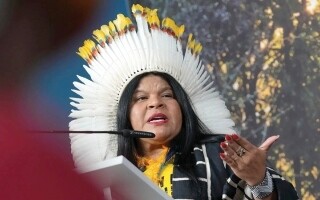
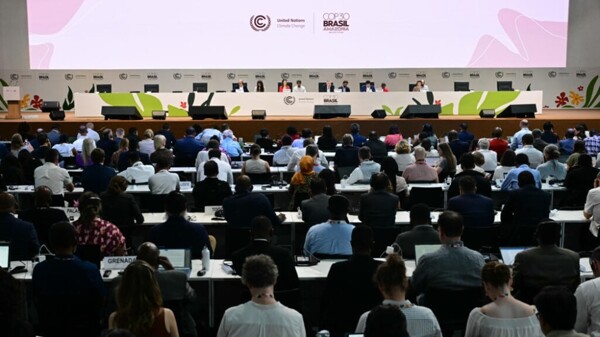
To give a boost to negotiations, Brazil has designated several foreign ministers as facilitators on key discussion topics, including finance, mitigation, just transition, and the so-called 'global balance,' which measures progress in implementing the Paris Agreement. Central issues such as financing from rich to developing countries and new emission reduction targets have been left off the official agenda. To appease tensions, the Brazilian government has been forced to sit and listen to their demands: an end to oil exploration in the Amazon and scrapping large infrastructure projects in the rainforest. The president of COP30, André Corrêa do Lago, avoided taking responsibility, stating that these issues would only be included in the agenda at the behest of nations. With that in mind, the presidencies of COP30 and COP29 developed a proposal to impose taxes on several economic sectors. On the eve of the summit, while thousands of climate activists and indigenous people protested in the streets of Belém, the convention center was guarded by the Brazilian Army and rows of fences. The main advances in the first week of COP came from the private sector, with financial commitments on the order of 'billions' of dollars, according to the UN. In the streets, Brazil's indigenous peoples have become the main drivers of the summit, the first held in their home, the Amazon rainforest. The fund will function as a tool of 'green capitalism': it will invest resources in the financial market to multiply their value and, after remunerating investors, will allocate the profits to forest conservation. However, Brazil has already acknowledged that the proposal lacks consensus and will require further studies, to be conducted starting in 2026. Among Latin American countries, Colombia is taking on a leadership role by trying to promote a political declaration calling for a 'roadmap' to end fossil fuels, but oil is completely off the table in Belém. However, one of the main demands of developing countries is precisely that a large portion of the financial contributions set by rich countries at COP29 in Baku, $300 billion annually, come from public funds. Starting Monday, ministers will take over the negotiations, which have advanced little on the most controversial issues at a technical level. This has caused headaches for the Brazilian presidency. Among investment initiatives outside the negotiations, a forest conservation fund promoted by Brazil stands out, which has already gathered $5.5 billion in commitments. The Asian country's pavilion is one of the largest and most frequented at COP30, and it is visited by authorities and company directors showcasing the country's progress in its energy transition, one of the most polluting on the planet. The absence of Trump resonates. COP30 is featuring as one of its protagonists the President of the United States, Donald Trump, due to his country's absence after withdrawing from the Paris Agreement for the second time. Last Friday, the Munduruku people blocked the main entrance, causing long lines. Criticism of the republican's climate change denial has been echoed by the leaders of many countries and also by a governor and a Democratic senator, the only US authorities present in Belém. On the second day of the summit, a group of indigenous people and environmentalists invaded the restricted UN zone. In reality, their ambitions are much higher: they aim to reach $1.3 trillion. The thirtieth UN Climate Change Conference, COP30, enters its decisive week this Monday, after six days of negotiations and under strong pressure from the Amazon's indigenous peoples and civil society. 'Decisions are made from the bottom up,' he argued. With Washington absent, China has gained attention.

Brazil Appoints Facilitators for COP30, Pressure from Indigenous Peoples Mounts
Brazil has appointed foreign ministers as facilitators for climate talks, excluding key issues from the agenda. This has sparked discontent among indigenous peoples and activists demanding an end to oil exploration in the Amazon. With the US absent, China is increasing its influence. Negotiations are entering their decisive week.