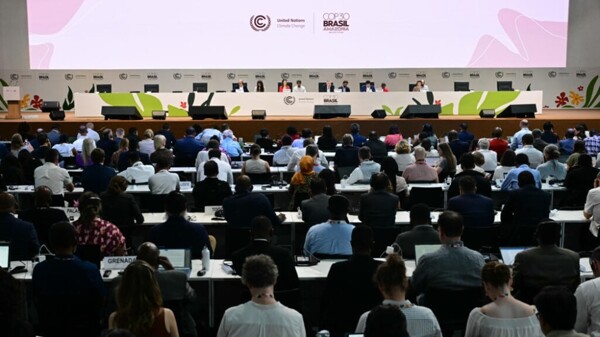
The global NGO Plan International is calling on governments and the international community to take decisive action at COP30, being held in Belém, Brazil. According to Cynthia Betti, Executive Director of Plan International Brazil and a delegate to the UN, "climate justice means ensuring that girls and adolescents can participate, adapt, and lead solutions in the face of the climate crisis."
A new study by the global NGO Plan International shows that the climate crisis disproportionately affects girls in Latin America and the Caribbean. It calls for climate negotiations, such as those taking place at COP30 in Brazil, to "assume greater commitments to ensure that childhood is at the center of policies and decisions" on the matter.
The study "Childhood and Climate Crises in Latin America and the Caribbean" was conducted between May and July 2025 in Brazil, Colombia, Ecuador, El Salvador, Guatemala, Haiti, Honduras, Paraguay, Peru, and the Dominican Republic. It reveals that the climate crisis is worsening child malnutrition, exposure to waterborne diseases like cholera, prolonged interruptions in education, and an increase in violence, including gender-based violence.
Furthermore, the climate crisis reinforces traditional gender roles and increases the risk of child marriage, according to the Plan report, which is based on climate financing data, focus groups, and interviews.
"Often, parents tend to take girls out of school first, so girls stop studying to be able to take care of the family, like cooking and things like that," an adolescent from Ecuador cited by Plan International stated.
Girls are "disproportionately" affected because "water scarcity makes menstrual hygiene management difficult and increases the risk of infections." It also "reinforces that gender roles often assign girls the responsibility of collecting water during scarcity periods, exposing them to greater risks of sexual violence."
However, "young delegates have faced significant barriers to accessing spaces like COP due to the high cost of participation and the limited number of accreditations," Betti added. "It is not enough to react to emergencies: we must transform the way decisions are made and resources are distributed, ensuring real inclusion, not merely symbolic."