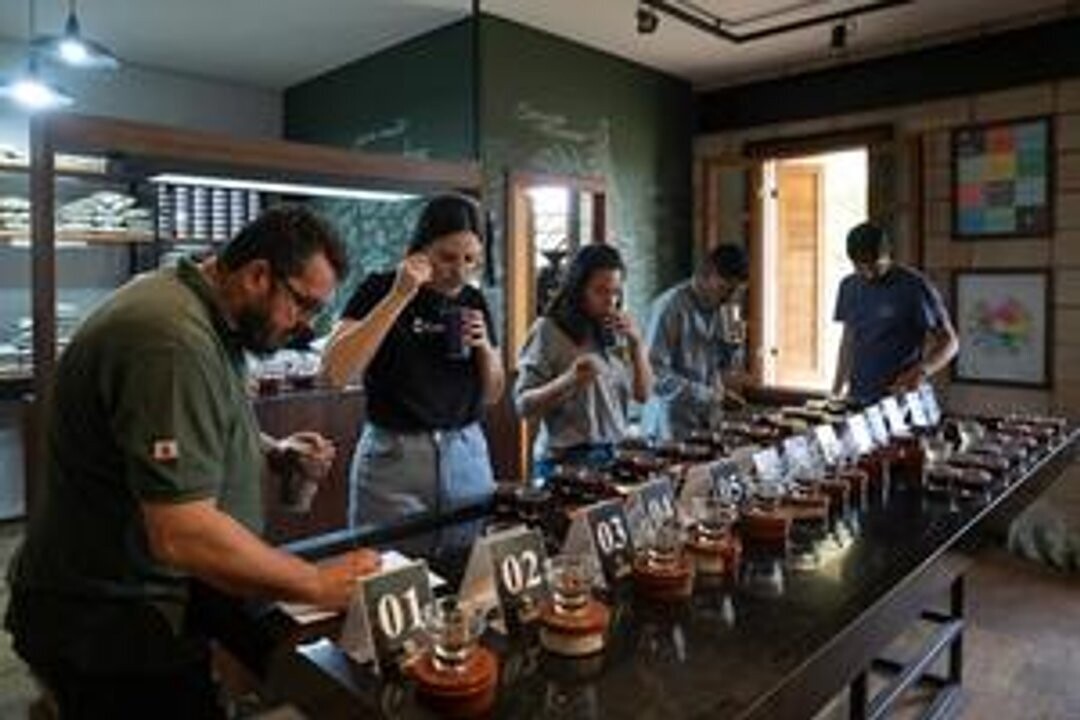
The Brazilian state of Acre, located in the far west of the Brazilian Amazon and bordering Peru and Bolivia, is beginning a new chapter in its agricultural history with the start of coffee production as a special Amazonian product. This initiative, led by local cooperatives, promises to transform the regional economy and open up export opportunities for small producers, who traditionally dedicated themselves to cattle ranching and the cultivation of tropical fruits. "We will need a lot of fieldwork and technical support to guarantee coffee quality," stated the superintendent of Cooperacre. The cooperatives' efforts are focused on elevating the profile of the so-called "Amazonian robusta", a coffee variety adapted to tropical rainforest conditions, and positioning the Amazonian grain among Brazil's special coffees. "We are only in the first year and a half of working with coffee, but we are already seeing very promising results," affirmed the financial director of "CooperLibre", Manoel Monteiro, in an interview with the Xinhua news agency. He is also the superintendent of the Central de Cooperativas de Acre (Cooperacre), an entity that brings together over a hundred cooperativists focused on producing fruits such as acerola, pineapple, and passion fruit. Monteiro explained that by promoting coffee, Acre could become a supplier within Brazil's coffee sector. The interest in coffee in Acre arose from the growing profitability of the crop compared to other traditional activities in the region. "But it starts in the field, with meticulous care in production," expressed Monteiro. For the financial director, this expansion does not mean abandoning other agricultural activities, but rather sustainable diversification. The bet on coffee in the region, in addition to diversifying Acre's productive base, reinforces a national trend of expanding Brazil's special coffee varieties into the Amazon. Fertile lands, cooperative organization, and a growing interest from international markets in sustainable products allow the Brazilian state to glimpse an unprecedented opportunity to generate income, keep farmers in the countryside, and project Amazonian coffee onto the global map of high-quality grains. "One of my dreams is to see the Amazonian robusta recognized as high-quality coffee. It can offer a 10 to 12 times higher income per hectare," explained Monteiro. According to the Cooperacre representative, the entity plans to start purchasing coffee in mid-2027 and allocate most of the production for export. Coffee has proven to be a much more profitable product than cattle ranching. "We know it requires technical knowledge and certifications, which is why we are learning from sector experts and from Embrapa (Brazilian Agricultural Research Corporation), which has brought us manuals and training courses," he commented. Coffee is a recent crop in Acre, but some producers already have highly productive plantations with yields exceeding 120 bags per hectare. Although the state has a low altitude of around 150 meters above sea level, Monteiro considered that the soil conditions compensate for the lack of height. "We have abundant and very productive land," he assured. However, the warm and humid climate of the western Amazon presents particular challenges for the region's agricultural producers. "Acre is a very fertile region, everything planted here bears fruit." "This is a region conducive to the development of fungi, so phytosanitary management will be key." "The majority of our family farmers have four to five hectares of land."