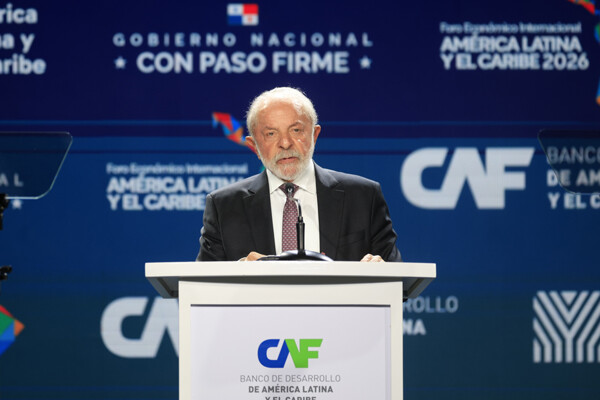
The president of Brazil, Luiz Inacio Lula da Silva, has formally proposed to discuss the reduction of the working day in the country. He requested the Council for Sustainable Economic and Social Development (CDESS), his main advisory body, to urgently analyze the feasibility of ending the current work scheme of six days on and one day off (6x1). During a meeting at the Itamaraty Palace, the Brazilian leader defended that the end of the 6x1 schedule and the possible reduction of the workweek from 44 to 40 hours are necessary steps that reflect the advances of modern society. Lula da Silva lamented the disconnect between the increase in productivity driven by technology and the lack of improvements in workers' quality of life. The president insisted that reducing the workday would not harm the economy and recalled that several countries have already adopted such measures. A constitutional amendment proposal (PEC) that seeks to modify the work schedule is already under analysis in the National Congress. Finally, Lula da Silva downplayed possible disagreements with the Legislative Branch on this issue, ensuring that dissent is a natural component of the democratic game. Using his union experience to illustrate the point, he stated: "In my time, a company had 40,000 workers and produced 1,200 automobiles." Lula da Silva pressed the CDESS, which is composed of a broad representation of civil society, including businesspeople, unionists, and artists, to address the issue "with great affection" in its upcoming meetings. The head of state concluded with a direct call to the council: "It no longer makes sense, with the technological advances we have had in this country, for production to increase, but for wages to fall. If you give me the advice to reduce the workday, I will accelerate the end of the 6x1 schedule to give the Brazilian people a shorter workday. What were all those technological advances for?"